Birthplace and Childhood in Uplands
Dylan Thomas was born on 27 October 1914 at 5 Cwmdonkin Drive in the Uplands area of Swansea. His parents had bought the newly built house in August that year, and Thomas lived there until he was 23. It was in this house that he produced an estimated two-thirds of his published work; a blue plaque now marks the property.
Schooldays at Swansea Grammar
Thomas attended Swansea Grammar School for boys in Mount Pleasant, where his father, D. J. Thomas, taught English. He was not a distinguished pupil, but he gained notice by publishing his first poem, "The Song Of The Mischievous Dog," in 1926, and by winning the school’s annual one-mile race in 1928. He left in 1931 to become a junior reporter for The South Wales Daily Post. The main surviving structure of the 1869 school building was renamed the Dylan Thomas Building in 1988.
Cwmdonkin Park: The Park That Became Poetry
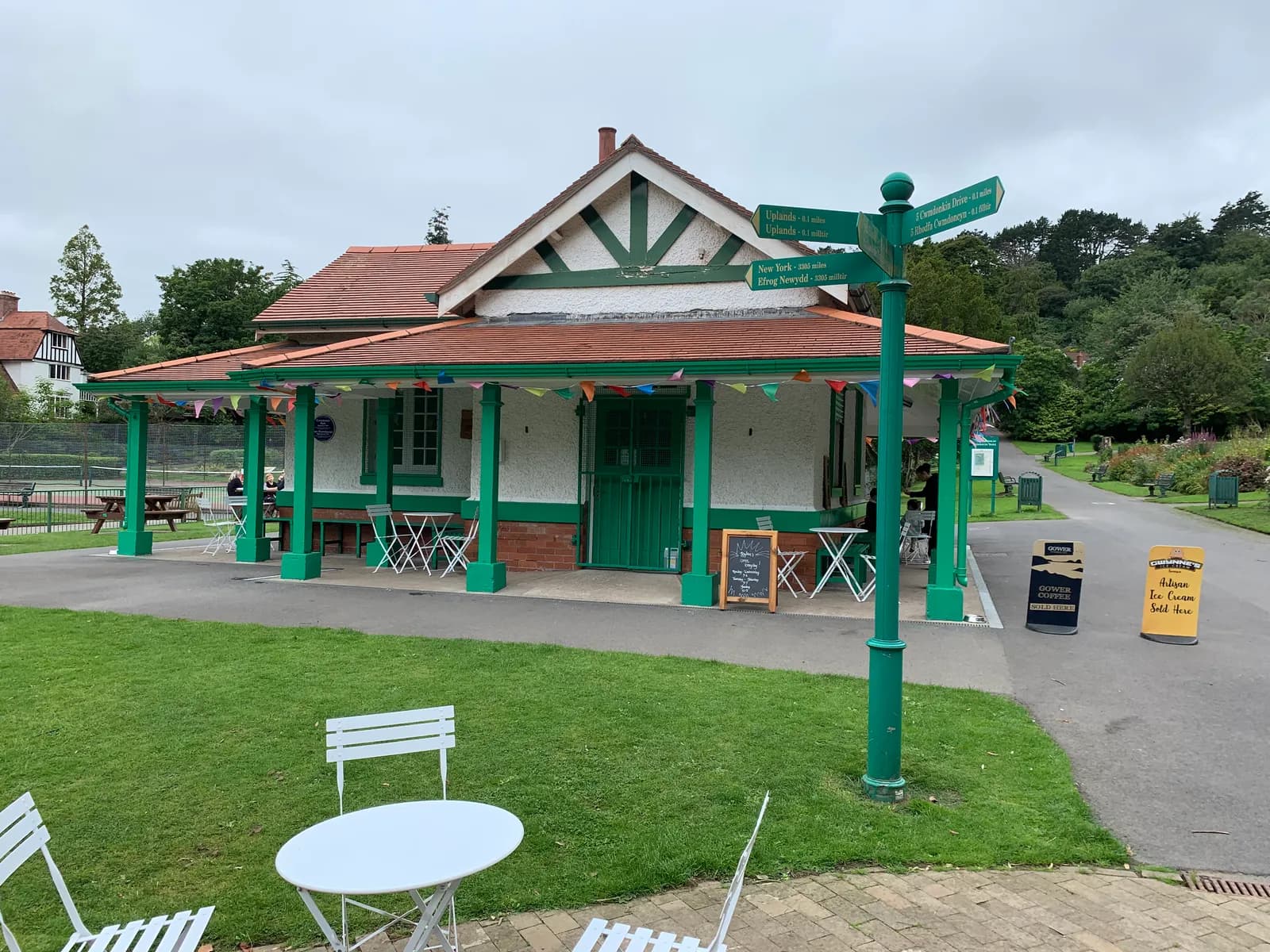
Cwmdonkin Park, a short walk from the family home, was a constant presence in Thomas’s childhood; he later wrote that he could hear children playing there from his bed. The park appears in his radio broadcasts Return Journey and Reminiscences of Childhood, and it is the setting for his poem "The Hunchback in the Park." The cast-iron drinking fountain he described is still present today. On 9 November 1963, a memorial stone inscribed with lines from "Fern Hill" was placed in the park to mark the tenth anniversary of his death. Following a £1.39 million refurbishment, the park reopened on 7 September 2013, in time for the centenary of his birth.
The Kardomah Gang and Swansea's Literary Scene
Before the war, the Kardomah Café in Swansea served as a meeting place for Thomas and a circle of young artists and writers that included the poet Vernon Watkins and the composer Daniel Jones. The group became known as "The Kardomah Gang." In his 1947 BBC broadcast Return Journey, Thomas recalled the café’s destruction during the bombing of Swansea: "The Kardomah Café was raised to the snow, the voices of the coffee drinkers — poets, painters, and musicians in their beginnings — all lost."
The Blitz and the Loss of an "Ugly, Lovely Town"
Swansea suffered heavy bombing by the German Luftwaffe during the Second World War. The most intense period, known as the "Three Nights' Blitz," took place from 19 to 21 February 1941; 230 people were killed and 391 injured. Thomas walked through the devastated town centre the day after the blitz ended and told his friend Bert Trick that "our Swansea has died." He later channelled those experiences into Return Journey, a broadcast that remains one of the most powerful eyewitness accounts of the destruction. Thomas famously described Swansea as an "ugly, lovely town," a phrase that captures the affection and ambivalence he felt for the place that shaped him.
A Lasting Legacy
Swansea continues to honour its most celebrated literary son. The Dylan Thomas Centre, housed in a Grade II* listed former guildhall in the Maritime Quarter, was officially opened in 1995 by former United States President Jimmy Carter. In October 2014 the centre launched the permanent "Love the Words" exhibition, which explores Thomas’s life and work through a range of media. The centre also hosts a year-round programme of literary events and the annual Dylan Thomas Festival, ensuring that the poet’s connection to the city remains visible for residents and visitors alike.