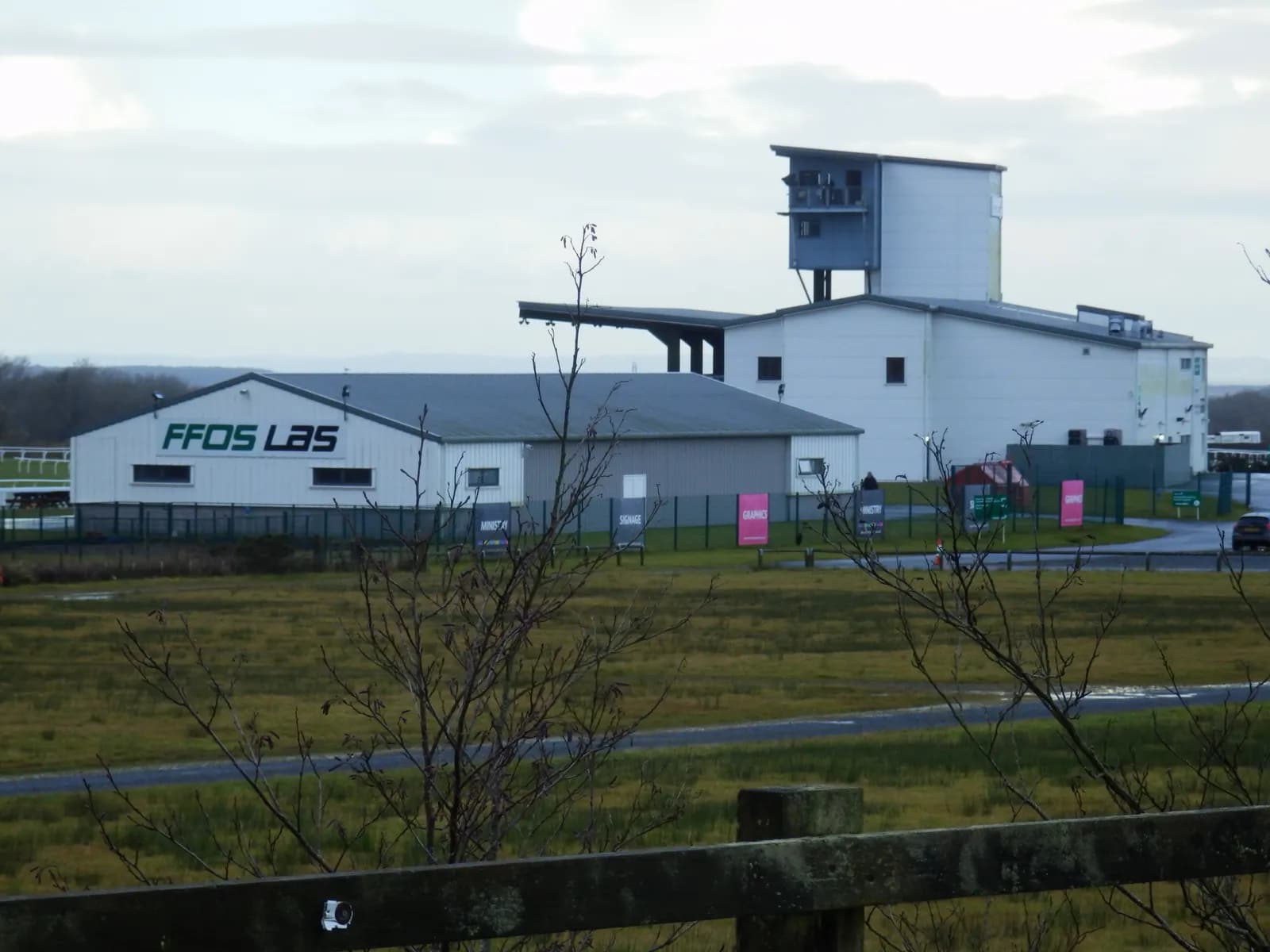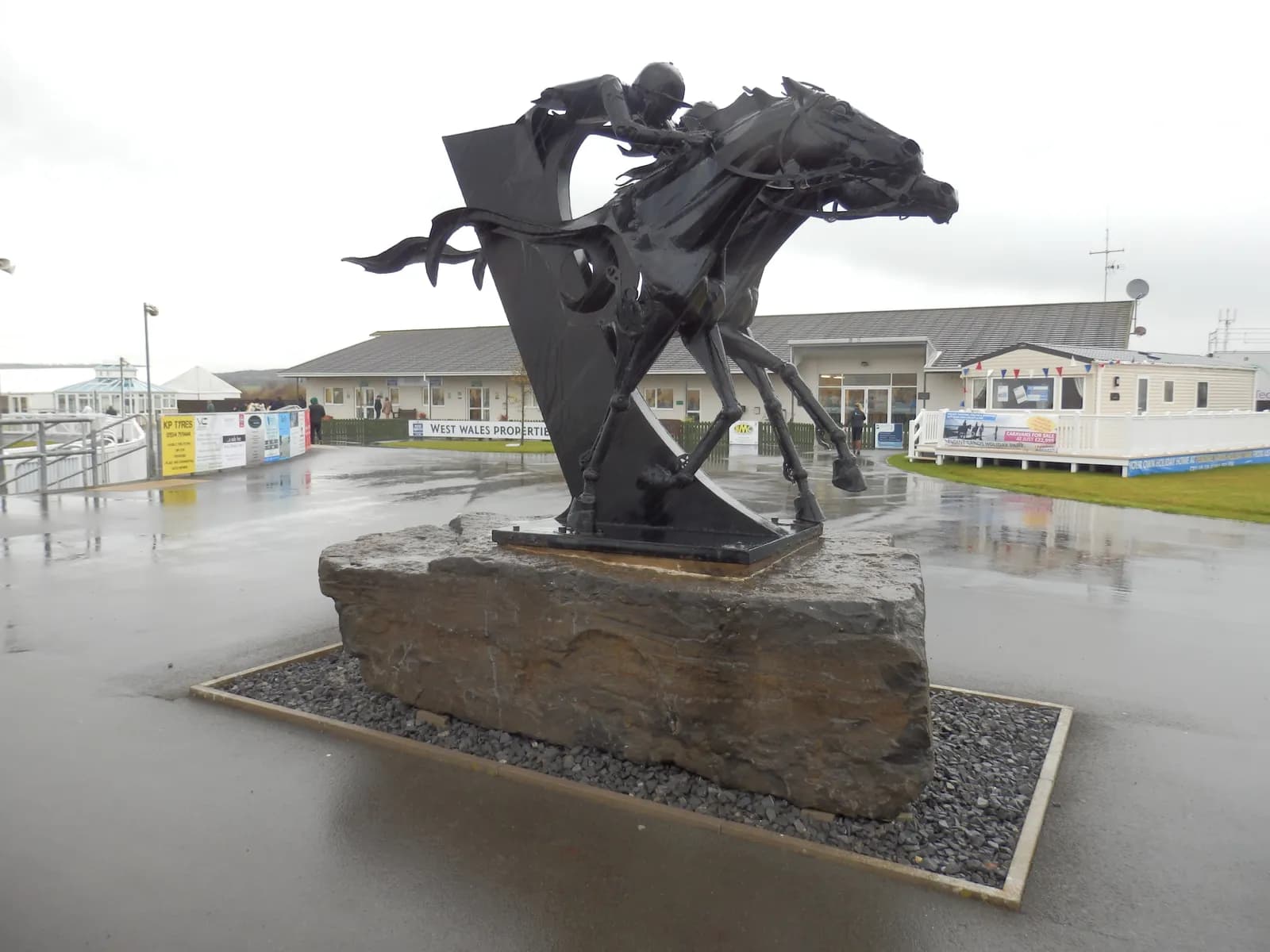
Less than twenty years ago, horses racing across Ffos Las would have been impossible to imagine.
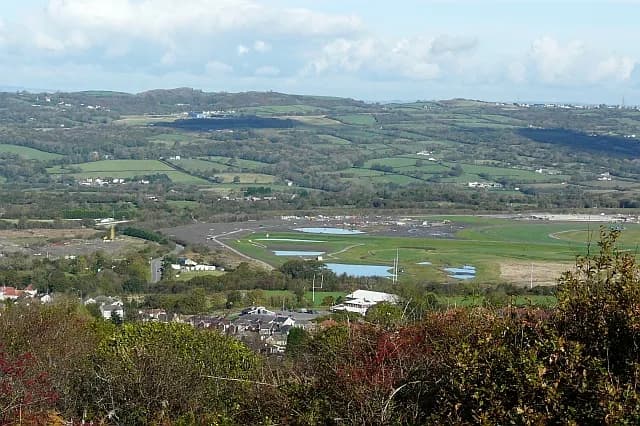
The land between Trimsaran and the Gwendraeth Valley was dominated by one of Europe's largest opencast coal mines, leaving behind an enormous scar in the Carmarthenshire countryside.
Today, it is home to Wales's newest racecourse.
Ffos Las has become the closest racecourse to Swansea and this October it hosts two afternoons of jump racing, while further east Chepstow stages three days of major Welsh racing.
For anyone looking for an autumn day at the races from Swansea, October offers plenty of choice.
Ffos Las races on Wednesday 14th October and Thursday 29th October, while Chepstow's Welsh Racing Festival runs from Friday 9th to Sunday 11th October.
From opencast mine to racecourse
The story behind Ffos Las is unusual even by racing standards.
Following the end of mining, local businessman Dai Walters saw an opportunity to turn the vast former industrial site into something entirely different.
His civil engineering business, the Walters Group, had both the machinery and expertise needed to reshape the landscape.
The result was a 600-acre site centred around a broad, sweeping racecourse built into what had become a natural amphitheatre.
Ffos Las opened on 18th June 2009.
It was Britain's first new turf racecourse for more than 80 years and only the third racecourse in Wales, joining Chepstow and Bangor-on-Dee.
Around 10,000 people attended the first meeting.
The opening was performed by legendary racing commentator Sir Peter O'Sullevan, while Welsh trainer Evan Williams provided an appropriate first winner when Plunkett won the opening race under Donal Fahy.
Tony McCoy, already one of the biggest names in National Hunt racing, rode three winners that evening.
Flat racing followed a month later, with Dream Queen winning the course's first Flat race on 21st July.
What had been an industrial landscape had become part of Welsh sporting life remarkably quickly.
A course with a distinctly Welsh identity
Ffos Las has always felt closely connected to the surrounding area.
The main grandstand bears the name of Jonathan Davies, the former Wales rugby international who grew up in nearby Trimsaran.
Welsh trainers have also played a major part in establishing the course.
Evan Williams became particularly associated with Ffos Las, recording more than 100 jumps winners there, with other Welsh-based trainers including Peter Bowen and Rebecca Curtis also enjoying considerable success.
Some very good horses have appeared there too.
Sprinter Sacre, who went on to become one of the outstanding two-mile chasers of his generation, won a novice hurdle at Ffos Las by ten lengths in 2011.
The New One, another familiar name to National Hunt followers, also raced at the course.
For more than a decade Ffos Las was also home to the Welsh Champion Hurdle.
The historic race had originally been staged at Chepstow and counts horses including Night Nurse and Sea Pigeon among its former winners.
It was revived at Ffos Las in 2011, remaining there until 2024 when Lump Sum, owned by course founder Dai Walters, won the final running at the track.
In 2025 the race returned to Chepstow as part of the new Welsh Racing Festival.
October racing at Ffos Las
This month's first Ffos Las meeting takes place on Wednesday 14th October, with an afternoon of hurdles and steeplechases.
Racing returns two weeks later on Thursday 29 October for another six-race jumps card.
October meetings often have a different feel from racing later in the winter.
Some horses will be beginning their campaigns after months away from the track, while younger hurdlers and chasers may only just be starting to establish themselves.
For regular racegoers, that can make the parade ring particularly interesting.
A horse's fitness and condition can matter as much as its form from the previous season, especially when runners are returning from long summer breaks.
Ffos Las itself gives horses relatively few excuses.
It is a broad, left-handed circuit of around a mile and a half, with sweeping bends and a long home straight.
Unlike some older racecourses built around awkward pieces of land, Ffos Las was effectively designed from scratch. Its wide, galloping layout makes it a comparatively straightforward test.
That does not necessarily make finding the winner any easier.
October weather in west Wales can quickly change the ground, so checking conditions before racing is worthwhile.
Three big days at Chepstow
Earlier in the month, Welsh racing turns its attention to Chepstow.
The Welsh Racing Festival takes place over three days from Friday 9th October to Sunday 11th October.
Friday's programme includes the Grade 2 Persian War Novices' Hurdle, traditionally an important early-season race for promising young hurdlers.
Saturday features the Silver Trophy, one of Chepstow's established autumn handicap hurdles.
The festival concludes on Sunday with the Welsh Champion Hurdle.
Chepstow provides a very different test to Ffos Las.
Its undulating course rises and falls through the Monmouthshire countryside, while the long home straight means there is still plenty of racing left after the final bend.
A horse comfortable galloping around the relatively level expanses of Ffos Las will not necessarily find Chepstow quite as straightforward.
That difference is part of what makes the two Welsh courses interesting.
Going racing for the first time
A midweek Ffos Las meeting is also one of the easier ways to experience National Hunt racing without the crowds of a major festival.
There is time between races to wander between the parade ring, bookmakers and trackside.
Before each race, the horses appear in the parade ring with their trainers, owners and jockeys.
Even without knowing much about racing, it is worth watching.
Some horses walk calmly around the ring, while others become noticeably more animated. Regular racegoers will often spend as much time watching the horses as studying the form.
Once they head onto the course, getting close to a fence or finding a place near the finishing line gives a far better impression of the speed and scale of jump racing than television ever can.
There is no obligation to bet either.
For anyone who does, on-course bookmakers offer fixed odds while the Tote pools stakes together before calculating the return to winning tickets.
The simplest approach is to decide beforehand what you are happy to spend and treat it as part of the cost of the day.
A day out from Swansea
Ffos Las sits between Llanelli and Carmarthen, making it the most accessible racecourse for much of the Swansea area.
By road, the route follows the M4 west before continuing towards Llanelli and the A484.
Llanelli station is around six miles from the racecourse, while Kidwelly and Pembrey and Burry Port are also nearby. The racecourse operates transport from Llanelli station on selected racedays, so it is worth checking arrangements before travelling.
The surrounding area also gives plenty of reasons to make more of the trip.
Pembrey Country Park and Cefn Sidan beach are a short drive away, with miles of coastline overlooking Carmarthen Bay.
The Millennium Coastal Path runs around the Burry Inlet towards Llanelli and is popular with walkers and cyclists.
Head a little further west and Kidwelly Castle rises above the River Gwendraeth.
The Norman castle is one of the best preserved in Wales and provides a dramatic contrast to the industrial history around Ffos Las.
The communities of the Gwendraeth Valley themselves also tell much of the story behind the racecourse.
Coal shaped this part of Carmarthenshire for generations. Ffos Las is a particularly visible example of what happened when that industry disappeared and the land was given an entirely new purpose.
Worth the trip east too
For Swansea racegoers prepared to travel further, Chepstow is easily reached along the M4.
The racecourse sits just outside the town, while Chepstow Castle makes an obvious addition to the journey.
Construction of the castle began shortly after the Norman conquest and its position above the River Wye remains one of the most impressive sights in the town.
But for sheer transformation, Ffos Las is difficult to match.
In the space of a generation, the site has gone from opencast coal mining to thoroughbred horses racing across one of the widest and most modern tracks in Britain.
This October provides two more chances to see it.
Ffos Las races on Wednesday 14th and Thursday 29th October, while Chepstow's Welsh Racing Festival takes place from Friday 9th to Sunday 11th October.
Check the individual racecourse websites before travelling for confirmed race times, tickets, transport information and the latest ground conditions. Autumn weather can affect National Hunt racing, so it is worth checking again on the morning of the meeting.